


This summers extraordinary hot weather has allowed me, as a Cumbrian landscape photographer to visit Jane Pit in Workington over several evenings to photograph the ruins during the sunset hour.
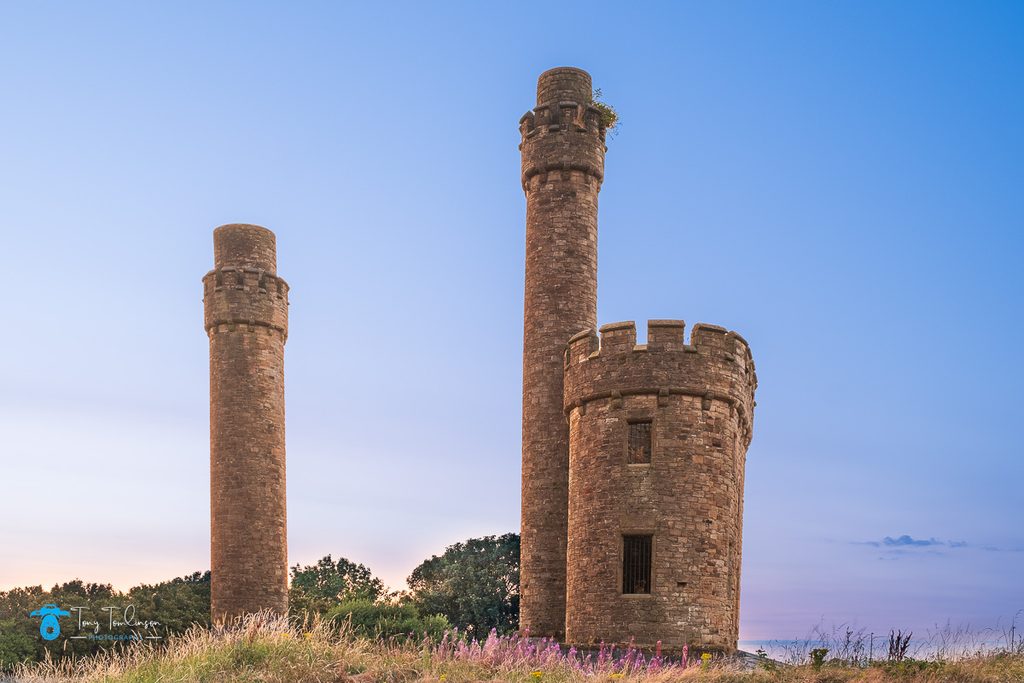
Jane Pit in Workington was an undersea coal mine sunk in 1843 by Henry Curwen, featuring a distinct castellated engine house, it was built to find fresh coal after the 1837 Chapel Bank disaster. The pit closed in 1875 when pumping stopped, allowing the sea to break in and flood the mine.
As the Industrial Revolution took hold, Workington began to expand rapidly as more and more workers arrived to meet the growing demands of its mining industry. By 1802, Workington’s miners were producing over 65,000 tons of coal each year.
The town’s success wasn’t solely down to the fact that it was sat atop a huge amount of coal and iron ore: it also had its own port, allowing the freshly extracted ore and minerals to be transported quickly and easily.
In the first half of the 19th century, coal mining began to slow down due to competition from Scotland and Wales, and the drop in demand following the end of the Napoleonic Wars. Workington felt the pinch, but the town persevered and exploration for new pits continued. Buddle Pit was founded in 1837 and just a few years later, in 1843, Jane Pit also opened.
The town experienced a second boom when a new seam of coal was discovered under the sea in 1846. Workington was back in business. Unfortunately, this period of optimism and hope was short lived: in 1875, the sea breached the mine, causing the tragic deaths of 100 miners. Jane Pit was closed, once and for all.
Present Day
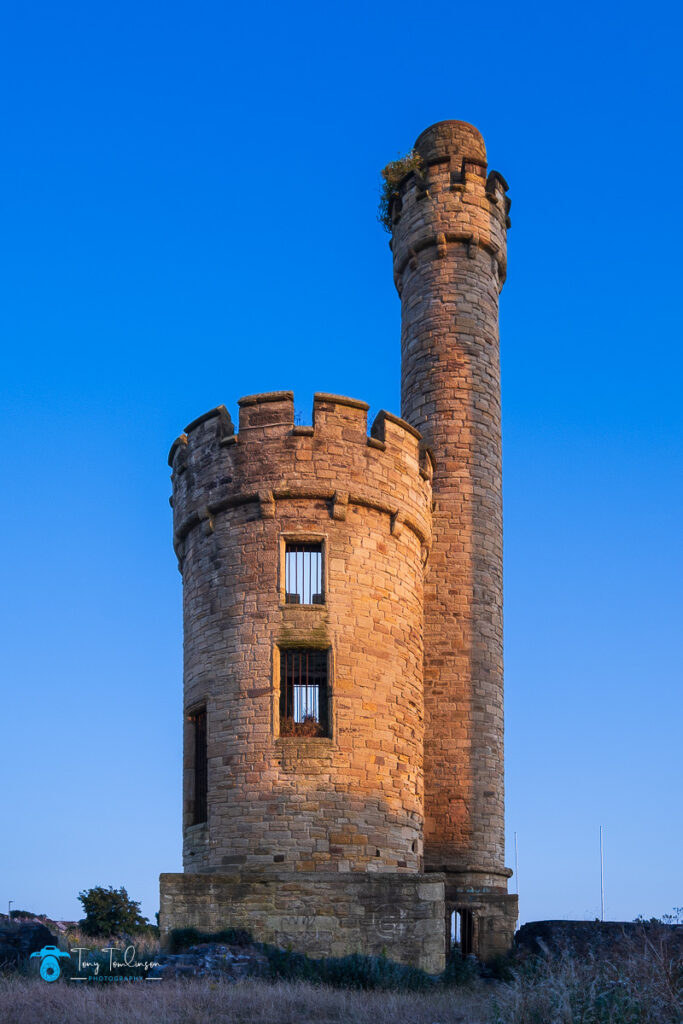
Jane Pit engine house and chimneys are now a Scheduled Ancient Monument and one of the best surviving examples of the 19th century castellated style.
It’s also a rare example of a pit with both a steam engine house and a horse gin circle (a pulley system operated by horses to wind up coal and pump out water), making Jane Pit a rather special place to see the evolution from horsepower to steam-power.
This all makes Jane Pit an important heritage site, both as part of Workington’s history and as a monument to the coal miners who braved treacherous conditions in the mines and were essential to the town’s prosperity.
Today only the curious oval castellated pumping house (date stone 1844) with chimney attached and free-standing chimney (inscription stone: “E.S.C. Esquire 1844”) survive in the middle of open grassland and playing fields.
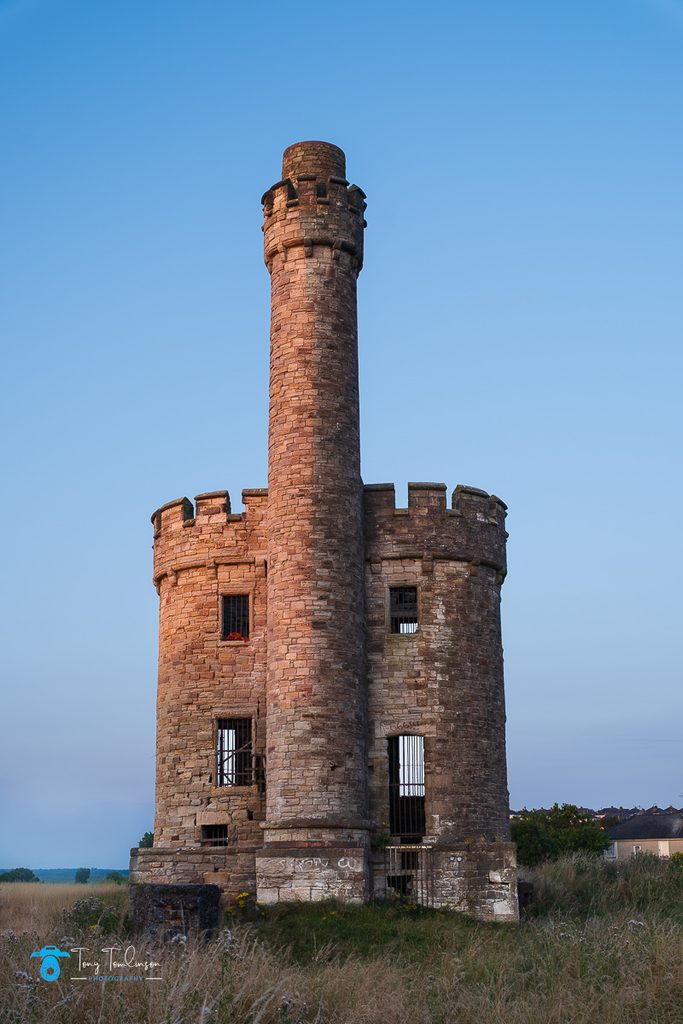
Even now, in the run-down condition the buildings are in, the detail and quality of the stone work has to be admired.
It would be a huge shame if these buildings were left to deteriorate and lost forever, as they represent a unique part of Workington’s history.
Thank you for finding the time to read this article, until next time, stay safe.
